〈 Όλα τα Επιστημονικά Άρθρα
ΧΑΡΑΛΑΜΠΟΣ ΚΡΙΤΖΑΣ, SEBASTIAN PRIGNITZ
THE “STELE OF THE PUNISHMENTS”. A NEW INSCRIPTION FROM EPIDAUROS
2020
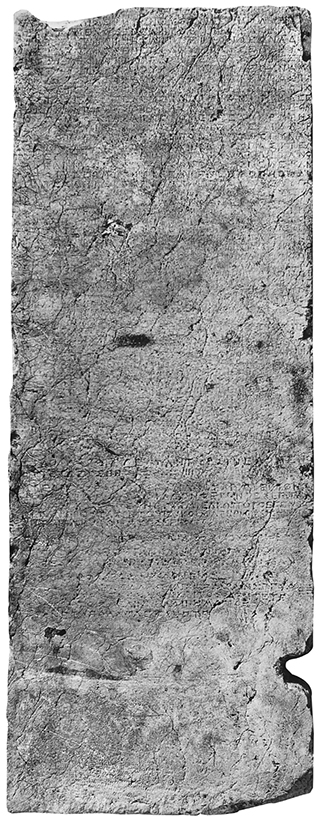
The “stele of the punishments” (fig. 1) was first located by Kritzas, then Curator of Antiquities of the Ephorate of Antiquities of Argolis and Corinthia, in February 1972. During his short stay at Ligourio for certain rescue excavations,1 he visited the Post-Byzantine church of the Dormition of the Virgin at the cemetery of the small village of Koroni,2 some 600 m southeast of Ligourio on the way to the Asclepieion. He then observed that the lintel of the church was a limestone stele carrying on its main surface a faint ancient inscription. The two extremities of the stone were built into the wall, thus hiding part of the text, which later proved to be relatively better preserved. Furthermore, the narrow side of the stele, facing the interior of the chapel, was covered by a fresco painted on the western wall. Any attempt to uncover the hidden parts of the stele in order to read it in situ would cause the crumbling of the already cracked old wall. It was obvious that the stele originated from the sanctuary of Asclepios and that it was transported to Koroni to be reused as building material, as was the case with many other blocks, inscribed or not.3 Fortunately, the Archaeological Council gave its agreement for the temporary detachment of the fresco, the extraction of the stele and the consolidation and restoration of the wall. This delicate and most precarious job was successfully realized some years later thanks to the energy and efforts of the then Curator of Byzantine and Post-Byzantine Antiquities Dr Isidoros Kakouris. The stele was transported to the epigraphic collection of the Museum of Epidauros. Its decipherment was extremely difficult, because many parts of the stele, especially at the center, were much worn. During repeated visits when possible over the years, Kritzas made several copies and in parallel he proceeded to study the problems that arose of various kinds. He published a preliminary report on the main topics and he gave seminar lectures expounding his interim conclusions. In view of this paper, Kritzas and Prignitz spent several days at Epidauros in 2018, working jointly and assiduously to decipher successfully several remaining points. They continued their collaboration in Athens working with copies, squeezes and digital photographs. Although not all the obscure passages have been totally elucidated, we think that we offer a trustworthy text of an extremely difficult and original inscription, avoiding audacious restorations.