〈 Όλα τα Επιστημονικά Άρθρα
ΒΑΣΙΛΕΙΟΣ Κ. ΛΑΜΠΡΙΝΟΥΔΑΚΗΣ, ΑΛΚΗΣΤΙΣ ΠΑΠΑΔΗΜΗΤΡΙΟΥ, ΕΥΑΓΓΕΛΟΣ ΚΑΖΟΛΙΑΣ, ΝΙΚΟΛΑΟΣ ΚΑΤΣΑΡΑΙΟΣ, ΑΛΕΞΑΝΔΡΑ Σ. ΣΦΥΡΟΕΡΑ
Ανασκαφή αρχαϊκού Κτηρίου με υπόγειο στο Ασκληπιείο της Επιδαύρου (2016–2021)
2024
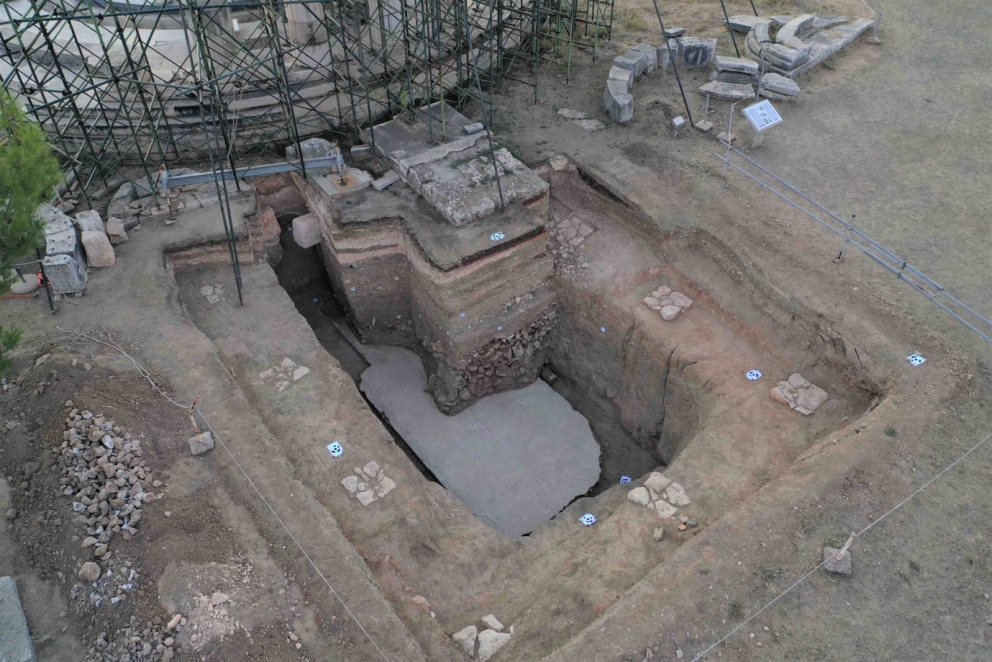
Recent excavations conducted by the National and Kapodistrian University of Athens in collaboration with the Ephorate of Antiquities of Argolis have brought to light a new building immediately east of the Tholos. It was two-storied. Porches spanning three posts on the front and five on the sides encircled the cella of the ground floor. Under the cella, an underground room had been dug out of the existing rock. The sides of the hewn rock were riveted with stone walls whose inner surface was covered with a thick layer of plaster, painted in a crimson red color. The floor of the room consisted of a solid mosaic of small white pebbles. A recess in the south side of the mosaic near the west end of the room shows that there existed a stone staircase, through which one could descend to the basement. The walls of the cella on the ground floor were made of mudbricks covered with a thin plaster, while the posts of the porches were wooden on stone bases. The building had a pitched wooden roof with thin clay tiles for the cella and, at a lower level, sloping roofs that covered the porches around it. Its construction dates to the late 7th / early 6th century BC. It was dedicated to Asclepius as a hero and chthonic divinity. The building was demolished early in the 4th century BC, to provide space for the erection of the Tholos.